


Monster Studio: Music Beats
3.0116.00 Reviews
App Specs
- Version
- 1.6.1
- Updated On
- License
- Free
- Downloads
- 10,000,000+
- Developer
- Tappy Game
- Categories
- Casual
- Platform
- Android
Screenshots
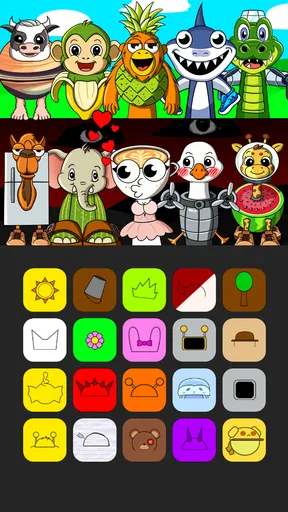
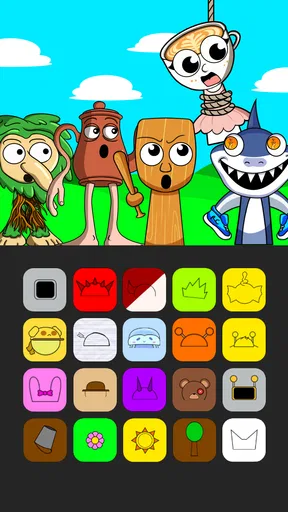
 Analysis by AppCompare
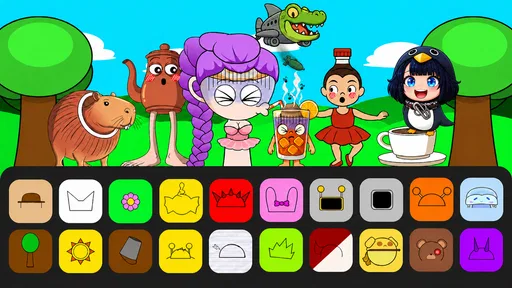
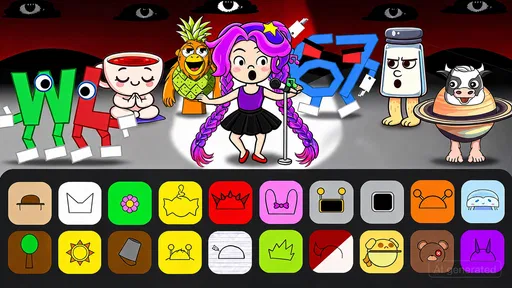
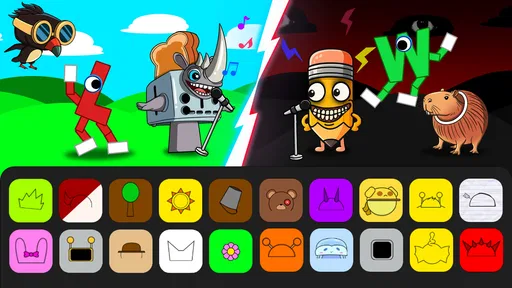
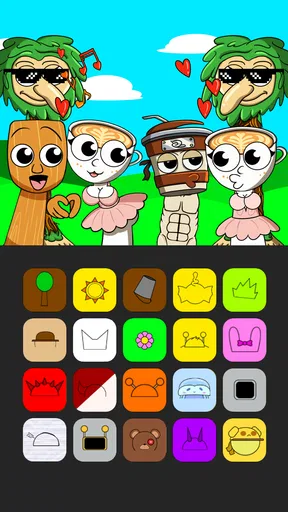
I spent time with Monster Studio: Music Beats to understand whether its central idea—building music by combining monster beats—holds up beyond a quick novelty session. It is a free casual game from Tappy Game, aimed at Everyone, and the appeal is easy to understand: instead of treating music as something you only listen to, it turns arranging sounds into the main activity. You discover the available monster performers, bring their distinctive rhythms together, and shape the resulting track through your choices.
That makes it quite different from a conventional rhythm game. In a typical rhythm title, I am reacting to notes, trying to maintain timing, or chasing a higher score. Here, the interesting question is what happens when different beat-making characters share the same musical space. The experience is more about curiosity and arrangement than reflexes. I found myself listening for how one part changes the feel of the whole group, rather than simply trying to finish a sequence perfectly.
The game has attracted a sizeable audience, with more than ten million installs, although its average rating sits at about 3.2 from roughly four thousand seven hundred ratings. That combination tells me the concept has clear reach, but the experience is not universally satisfying. After using it, I can see why: the basic creative hook is approachable, while the amount of depth and long-term variety may depend heavily on what each player expects from a casual music game.
Why combining monster beats is the whole experience
The strongest capability here is not a separate tool or a complicated editor. It is the act of combining the characters’ beats and hearing the group change as a result. That sounds simple, but it gives the game a useful kind of immediacy. I do not need musical training to understand the outcome. Add a sound, remove one, and the atmosphere shifts in a way I can recognize immediately.
This is where the “monster studio” idea works best. The performers are not just decorative figures placed around a screen; they are the way the game presents musical building blocks. Each one contributes to the overall identity of the track, so discovery and listening become connected. I was not choosing characters only because they looked interesting. I was choosing them because I wanted to hear how their part affected the combined rhythm.
The practical strength is instant feedback: every arrangement decision has an audible consequence. That makes the game welcoming for someone who would never open a traditional music-making application. There is no pressure to understand tempo markings, scales, or recording terminology before getting started. The game communicates through sound and visual character design, which keeps the learning curve light.
At the same time, this simplicity defines the limits of the experience. Players looking for a full beat-making workstation, detailed editing controls, or a way to shape every individual note should not approach it with those expectations. The appeal is guided experimentation. I can explore combinations, but I am not using the game as a replacement for a serious digital audio tool.
Worth Reading Before You Choose

EA SPORTS FC Mobile 26 Is a Bigger Football Game, but It Takes Time

Flipboard Shows What News Apps Must Do Beyond the Feed

Switching to Android Auto Means Rethinking Your Driving Routine

Google Calendar Makes a Crowded Week Easier to Manage

Ludo King Makes the Most of the Minutes Between Plans

Baby Panda World Brings Quick Play to Modern Phones, but Its Game Library Feels Busy
How the musical loop feels during ordinary play
In practice, I found the best way to play was to treat each session like a short listening experiment. I would begin with a small combination instead of filling the arrangement immediately. Then I would pay attention to the character of the result before adding another beat. This made the differences easier to notice and stopped the screen from becoming a blur of sounds.
That approach also reveals an important trade-off: more parts do not automatically mean a better track. A fuller combination can feel more energetic, but it can also make the individual contributions harder to distinguish. When I focused on just a few complementary beats, the result often felt clearer. When I added everything available without listening carefully, the arrangement became less intentional.
This is one of the more useful lessons hidden inside the casual format. The game rewards restraint as much as collection. A player who experiments with removing a beat may learn more than someone who keeps adding new ones. Silence or space can make an existing part stand out, even though the game presents the action as combining performers.
I also recommend listening for transitions rather than judging a combination after a few seconds. A beat that seems unusual on its own may give the group a stronger identity once the other parts settle around it. Conversely, a sound that feels exciting at first can dominate the arrangement and make the rest less noticeable. That makes repeated rearranging worthwhile, especially for players who enjoy small changes with immediate results.
A realistic use case: a short break that becomes a creative reset
The best everyday scenario for me was a short break between tasks. I could open the game without committing to a long campaign or a demanding challenge, try a few combinations, and leave after finding a rhythm I liked. It works well in that situation because the activity has a clear focus: listen, adjust, and decide whether the new mix feels better.
It is also suitable for sharing a casual creative moment with a child or a friend. The Everyone age rating makes the presentation broadly approachable, and the monster theme gives people an easy starting point for conversation. One person can suggest a character while another listens for the change. That turns the game into a small collaborative experiment, even when only one person is holding the device.
For children, I would frame it as an exploration game rather than a music lesson. It can encourage attention to patterns and combinations, but I would not present it as a structured course in composition. For adults, the attraction is similar: it offers a playful way to interact with sound without demanding technical knowledge or a large time investment.
The game is less convincing when I want a deep, goal-driven session. If I am looking for a competitive score chase, a demanding timing challenge, or a long progression system, a traditional rhythm game is likely to serve me better. Monster Studio: Music Beats is at its most comfortable when the goal is to discover a pleasing combination, not to prove mastery through increasingly difficult performance.
What I would do before spending anything
The game is free to start, which makes trying its central idea straightforward. I would use that opportunity to decide whether the sound-combination loop genuinely holds my attention before considering any optional purchase. The listed in-app purchase price can reach $29.99 per item, so I would not treat paid content as an automatic part of the experience.
That price point matters because the game’s value depends on how much enjoyment I get from repeated experimentation. If I only want to test the concept for a few minutes, paying for an individual item may not make sense. If I become attached to collecting or expanding the available musical possibilities, the decision becomes more personal, but I would still judge each purchase by the amount of new creative variety it adds rather than by the appeal of a single character.
My advice is to spend time comparing arrangements using the content already available to you. Try a sparse mix, a crowded mix, and a deliberately unusual mix. If those three approaches already feel repetitive, buying more is unlikely to fix the underlying issue. If each variation makes you curious about another combination, then the game’s core loop is probably working for you.
Where the experience can lose momentum
The main weakness is the possibility of repetition. Combining beats is immediately understandable, but an easy-to-learn system can begin to feel narrow if I am expecting constant new challenges. The game’s success therefore depends on whether I enjoy the process itself. Someone who needs a strong sense of progression may find the creative loop less motivating once the initial discovery has passed.
The rating of around 3.2 reflects that uneven fit. I would not read it as proof that the concept fails; rather, it suggests that accessibility and lasting satisfaction are not the same thing. A game can be pleasant to sample and still leave some players wanting more structure, more control, or a clearer reason to return.
Another limitation is that a casual arrangement system cannot offer the same precision as a dedicated music application. I cannot approach this as a substitute for recording, mixing, or composing with detailed control. Its advantage is that it removes technical barriers, and its cost is that it also removes some of the fine control experienced creators may want.
There is a similar trade-off in the visual presentation. The monster theme gives the activity personality and helps distinguish the beats, but players who prefer realistic instruments or a traditional studio interface may find the presentation too playful. I enjoyed the character-based framing, yet I can see why someone seeking a serious production environment would choose another category entirely.
How it compares with familiar casual alternatives
Compared with a standard rhythm game, this title asks me to create a combination rather than perform against a fixed pattern. That makes it gentler and more exploratory, but also less demanding for players who enjoy precision. A rhythm game is usually better when I want a clear test of timing. This one is better when I want to hear how a selection of parts changes a shared musical scene.
Compared with a conventional music-making app, it is much easier to approach. I do not need to learn a complicated interface before experimenting. The compromise is equally clear: I give up the detailed control, editing depth, and open-ended production workflow that serious music apps provide. The choice depends on whether I value immediate playfulness or technical freedom.
It also differs from collection-focused casual games. The characters matter because of the sounds they contribute, not merely because they are items to accumulate. That gives collecting a practical listening purpose. Still, anyone who dislikes repeating combinations to discover small differences may find the collection aspect less compelling than in a game with stronger strategic consequences.
Small habits that make the core mechanic better
I found three habits especially useful. First, I would change only one beat at a time. Replacing several performers together makes it difficult to understand which choice improved or weakened the arrangement. One-at-a-time changes turn each attempt into a clearer comparison.
Second, I would occasionally remove the part I consider essential. This sounds counterintuitive, but it exposes whether the arrangement depends too heavily on one dominant sound. If the result becomes more balanced without that performer, I have learned something about the structure rather than simply collecting another combination.
Third, I would use a short listening pause before making another change. The first impression of a new mix can be misleading, especially when a new beat is louder or more noticeable. Giving the arrangement a moment helps me judge whether it actually fits or merely grabs attention.
These habits do not turn the game into professional composition software, but they make its limited control more meaningful. They also reduce the feeling of randomly tapping through options. The more deliberately I listened, the more the game felt like a small creative sandbox rather than a sequence of interchangeable selections.
Who is likely to get the most from it
I would recommend it to casual players who enjoy sound, character-driven presentation, and low-pressure experimentation. It is a good fit for someone who wants to make playful musical combinations without studying a complicated interface. It can also work for families or friends who want an easy activity where everyone can suggest what to add or remove.
It is particularly suitable for people who prefer creative discovery over competition. If your favorite part of a game is seeing how a small choice changes the atmosphere, the central mechanic gives you a reason to keep testing arrangements. The free entry point also makes it reasonable to try before deciding whether the loop has enough variety for your habits.
I would skip it if my priority were advanced audio control, demanding rhythm challenges, or a clearly structured long-term progression path. I would also be cautious if I tend to lose interest once I understand a game’s basic interaction. The concept is charming, but its enjoyment comes from continuing to explore combinations, not from a large set of unrelated systems.
The technical entry requirement is modest: the current version is 1.6.1 and supports Android 7.1 or later. That makes it accessible on a broad range of older compatible devices, although the quality of any individual play session will still depend on how comfortable the device is with the game. I would keep the application updated where possible so I am evaluating the current build rather than an earlier one.
My overall recommendation
Monster Studio: Music Beats succeeds when I treat it as a playful beat-combination toy with game elements, not as a full studio or a competitive rhythm test. Its central capability is clear and enjoyable: choose monster performers, listen to how their beats interact, and refine the group until the result feels right to you.
That focus gives the game an inviting personality and makes it easy to recommend for short creative breaks. It also creates its main risk. Without a personal interest in repeated listening and rearranging, the experience may not provide enough depth to sustain attention. The moderate average rating is consistent with that divide between immediate charm and long-term expectations.
For me, the best reason to try it is the low barrier between decision and result. I can make a change and hear its effect without learning production software first. I would start free, test whether the combinations continue to surprise me, and avoid assuming that a paid item is necessary to enjoy the basic idea. If you want a friendly, casual way to play with musical groupings, Tappy Game’s creation is worth exploring. If you want precision, competition, or professional control, a different kind of music or rhythm app will be the better choice.
Pros
- Simple beat-making tools are easy for beginners to understand.
- Loop-based creation lets you build tracks quickly without music theory.
- Short sessions make it suitable for casual
- on-the-go creativity.
- Experimenting with different sounds can help develop musical ideas.
- The visual interface makes arranging patterns clear and intuitive.
Cons
- Advanced producers may find the editing options too limited.
- The available sound library may become repetitive over time.
- Some features may require in-app purchases or premium access.
- Small screens can make precise timing and note adjustments difficult.
- Finished tracks may lack the depth of music made in full DAWs.
FAQs for Monster Studio: Music Beats
What is Monster Studio: Music Beats?
Monster Studio: Music Beats is a music-creation game that lets you build songs by combining animated monster characters, each representing a different beat, melody, vocal, or sound effect. You can experiment with arrangements, unlock or discover new musical elements, and create tracks in a playful visual environment. It is designed for casual users, music fans, and anyone who enjoys creative experimentation without needing formal musical training.
How does the gameplay and music creation system work?
The main experience revolves around selecting and arranging monster performers to create a complete musical composition. Each character contributes a distinct sound, so changing the lineup can significantly alter the rhythm, mood, and overall style of the track. The controls are generally simple and accessible, making it easy to test combinations, remove sounds, and refine your mix. Progress comes from exploring different arrangements rather than mastering traditional instruments.
Is Monster Studio: Music Beats free to download and play?
Monster Studio: Music Beats may be available as a free download, but the exact payment model can vary depending on the Android or iOS version and your region. Some editions may include advertisements, optional purchases, or extra content that is not available immediately. Before installing, check the official store listing for current information about in-app purchases, subscriptions, advertising, and whether any features require payment.
Does the game require an internet connection?
An internet connection may be needed for the initial download, updates, advertisements, cloud-related features, or optional content. However, the core music-making experience may work offline once the necessary files have been installed. Offline availability can differ between versions and devices, so users who plan to play while traveling should test the app after installation. Also remember that removing internet access may disable online rewards or promotional features.
Is Monster Studio: Music Beats suitable for children and beginners?
The colorful presentation, simple controls, and creative sound-based gameplay make Monster Studio: Music Beats approachable for beginners and younger players. Nevertheless, parents should review the store rating, advertising, privacy information, and in-app purchase settings before allowing children to use it. The app is better understood as an entertaining music toy than as a complete music-production tool, so expectations should remain focused on experimentation and casual enjoyment.


